
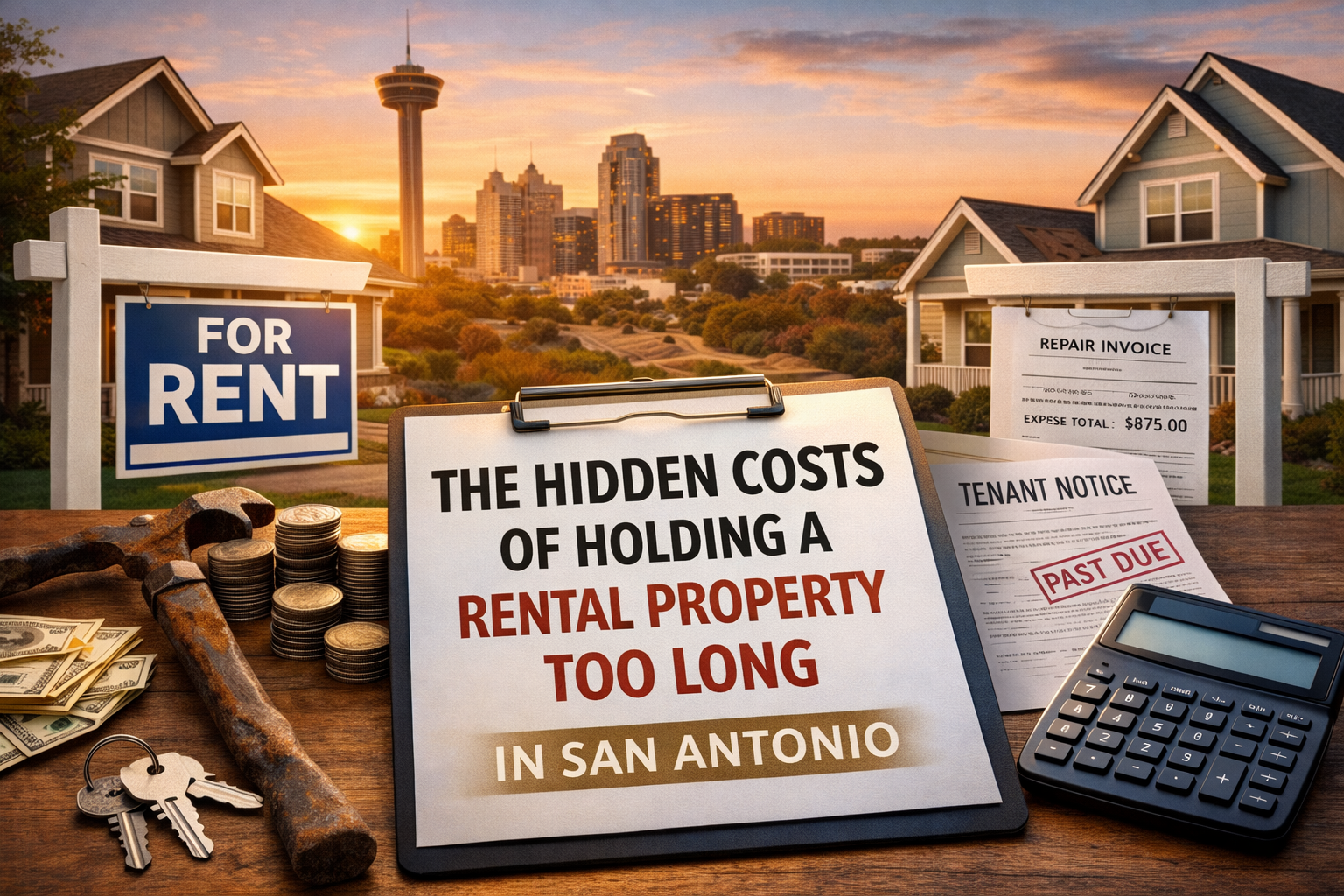
Many San Antonio rental property owners focus on monthly income—but overlook the long-term costs of holding a property longer than they should.
Many owners continue holding simply because the property is occupied and generating rent. What often gets overlooked are the hidden costs—financial, operational, and personal—that build over time.
If you’ve owned your rental for several years, it may be worth asking:
Is this property still working for you—or are you working for it?
A Profitable Property Can Still Be the Wrong Fit
Many landlords don’t exit because the property fails—they exit because their time, priorities, and tolerance for involvement change.
1. Rising Maintenance Costs Over Time
As properties age, maintenance becomes more frequent and more expensive. HVAC systems, roofs, plumbing, and appliances all have life cycles.
What starts as occasional repairs can turn into ongoing capital expenses that reduce your net return.
- Deferred maintenance compounds over time
- Emergency repairs often cost significantly more
- Older properties require more coordination and oversight
Tired of unpredictable maintenance expenses?
Professional oversight and vendor relationships can help stabilize repair costs and reduce surprises.
2. The Time Burden Most Owners Underestimate
Even one rental property requires consistent attention—leasing, maintenance coordination, tenant communication, and compliance.
Over time, many owners realize they are trading time for income in a way that no longer makes sense.
- After-hours maintenance calls
- Tenant turnover coordination
- Ongoing administrative tasks
Is your property taking more time than it should?
A quick review can help determine whether better systems—or a different strategy—would improve your situation.
3. Missed Opportunities to Reallocate Equity
Holding a property long-term ties up capital that could potentially be used elsewhere.
While appreciation can be beneficial, it should be weighed against:
- Alternative investment opportunities
- Debt reduction strategies
- Lifestyle or retirement planning goals
Wondering if your equity could be working harder?
Evaluating your options now can help you make a more strategic decision rather than reacting later.
4. Compliance and Risk Exposure
Rental property ownership involves legal responsibilities. In Texas, landlords must comply with regulations related to repairs, deposits, and tenant rights.
As rules evolve, staying compliant becomes more complex—especially for self-managing owners.
- Security deposit handling requirements
- Repair obligations under Texas Property Code
- Fair housing considerations
The U.S. Department of Housing and Urban Development (HUD) enforces federal fair housing laws, which apply to rental property operations.
Free Rental Property Exit Checklist
Evaluate whether you should keep, professionally manage, or prepare to sell your property with a structured checklist.
Frequently Asked Questions
Is it better to hold or sell a rental property?
It depends on your financial goals, time availability, and long-term strategy.
When should I consider selling my rental?
When maintenance, time commitment, or risk outweigh the benefits.
Can property management improve my returns?
In many cases, better leasing, maintenance control, and tenant retention can improve performance.
Make a Strategic Decision, Not a Reactive One
Whether you keep your property, improve management, or prepare to sell, a clear plan will help you protect both your time and your investment.